

Wednesday, March 18, 2015

Wednesday, March 11, 2015
Teaching Our Children Salah (Solat)
Make Your Children Love Salah (Solat)
A long time ago, there lived a wise man. His name was Luqman  . One day he told his son:
. One day he told his son:
“O my son, establish prayer…” [Qur’an: Chapter 31, Verse 17]
How many times do you remember your parents saying the same?
Salah is the second pillar of Islam. It is an obligatory act for all Muslims and unlike the other four pillars, there is no exemption from it. Why do you think that is the case? Salah is the wire that connects us to Allah  .
.
.
All the previous advice of Luqman was centered around teaching his son how to build the connection. Salah is the act of switching on the button for the current to flow once the wires are all in place.
was centered around teaching his son how to build the connection. Salah is the act of switching on the button for the current to flow once the wires are all in place.
So what happens once the connections are in place and the flow of energy ebbs through the wires? It forms a wall around the believer that stops him/her from committing any bad deeds.
Allah says in Surah Al-Ankabut:
says in Surah Al-Ankabut:
“Recite, [O Muhammad], what has been revealed to you of the Book and establish prayer. Indeed, prayer prohibits immorality and wrongdoing, and the remembrance of Allah is greater. And Allah knows that which you do.” [Qur’an: Chapter 29, Verse 45]
Just as we make sure that our children are properly protected to go out in the cold, we need to make sure that they are protected from the traps of Shaytan before they venture out in this world.
It is our duty as parents to help our kids build their connection with Allah properly and be there for them when they switch it on, In sha Allah.
properly and be there for them when they switch it on, In sha Allah.
Here are some practical tips to help your child love and establish regular salah:
1. Make dua for your kids to love salah
Ibrahim knew the importance of salah in our lives. He begged Allah to not only help him in establishing prayer, but also his descendants who will come later. Allah loved his dua so much that He recorded it for us in the Qur’an, so that you and I can ask Allah through the same words to make us and our descendants among those who establish salah.
knew the importance of salah in our lives. He begged Allah to not only help him in establishing prayer, but also his descendants who will come later. Allah loved his dua so much that He recorded it for us in the Qur’an, so that you and I can ask Allah through the same words to make us and our descendants among those who establish salah.
“My Lord, make me an establisher of prayer, and [many] from my descendants. Our Lord, and accept my supplication.” [Qur’an: Chapter 14, Verse 40].
2. Make salah an important part of your life
Time and time again, I have realized that no matter how much I plan my parenting goals, my major focus for the traits and habits that I want my children to develop are the ones that I focus on in my life. For example, the days on which I recite more Qur’an, I make sure that my children also don’t miss or skip it. So, it is very important to understand and acknowledge the necessity of salah in our own daily lives to explain it to our children. You forbid your child with determination to not play with matchsticks because you know with certainty the danger of fire. This “determination” is also what is required to help your children understand the importance of salah in their lives.
3. Teach your kids the duas for salah
Games, quizzes, and bedtime routines are great ways to teach our children the necessary duas for salah, preferably before they reach 7 years. This eases the progression to praying by themselves.
4. Invite your kids to pray with you
Invite your children to pray salah with you. Salah is a beautiful aspect of our religion. And also a major area of concern for Shaytan. Invitation without coercion stands a greater chance of making the children fall in love with salah. Telling them that salah is a time that we spend in the presence of Allah , talking to Him and sharing our feelings with Him encourages them to pray. Letting them know that Allah answers back to us when we recite Surah Fatiha in salah, making them choose their hijabs, caps and prayer mats encourages the children to pray. Taking them to the mosque and making them stand with you in congregation to pray also helps in teaching them the basic actions in salah.
, talking to Him and sharing our feelings with Him encourages them to pray. Letting them know that Allah answers back to us when we recite Surah Fatiha in salah, making them choose their hijabs, caps and prayer mats encourages the children to pray. Taking them to the mosque and making them stand with you in congregation to pray also helps in teaching them the basic actions in salah.
5. Start with one salah and then progress to the next one
First focus on getting your child to pray salah for one time properly, before moving on to the next one. For instance, my daughter loves to pray Isha, the night prayer, as she feels that she can stay awake longer! She was pretty disappointed when the time moved to 6 pm in winters!
6. Establish a reward system
Children love gifts. Allah rewards us for salah, so we should follow suit and reward our kids when they start praying! Praising them, giving them extra points, and throwing a party for them when they establish a routine for salah all work to motivate them to pray regularly.
rewards us for salah, so we should follow suit and reward our kids when they start praying! Praising them, giving them extra points, and throwing a party for them when they establish a routine for salah all work to motivate them to pray regularly.
The family that prays together, may Allah make them enter Jannah together. I recently heard a sister say that she tells her children when they seem reluctant to pray, that if In sha Allah they pray together, maybe Allah will make them enter Jannah together. SubhanAllah! This is such a beautiful vision. The father can lead the prayer and sometimes, the teenage sons can take over as imam.
make them enter Jannah together. I recently heard a sister say that she tells her children when they seem reluctant to pray, that if In sha Allah they pray together, maybe Allah will make them enter Jannah together. SubhanAllah! This is such a beautiful vision. The father can lead the prayer and sometimes, the teenage sons can take over as imam.From Productive Muslim
Click to read more: http://productivemuslim.com/luqman-parenting-lessons-part5/#ixzz3U5HiBqAe
Tuesday, March 10, 2015
Shape Party
What a better way to learn 'SHAPES' than by eating them up ~ square sandwiches, round cookies, triangle water melon slices and so forth. To make the party more 'lively' , the children wore hats of different shapes or have different shapes on the hats!
Thank you to all parents for your support to make this activity a success. We hope that through this activity, the children will be able to recognise some shapes by now.





Monday, March 9, 2015
10 Things You Can Do to Raise a Reader
- Read from day one. Start a reading routine in those very first days with a newborn. Even very young babies respond to the warmth of a lap and the soothing sound of a book being read aloud.
- Share books every day. Read with your child every day, even after he becomes an independent reader.
- Reread favorites. Most children love to hear their favorite stories over and over again. Rereading books provides an opportunity to hear or see something that may have been missed the first time, and provides another chance to hear a favorite part.
- Send positive messages about the joys of literacy.Your own interest and excitement about books will be contagious!
- Visit the library early and often. Public libraries are great resources for books, helpful advice about authors and illustrators, story times, and more. Make visiting the library part of your family's routine.
- Find the reading and writing in everyday things. Take the time to show your child ways that adults use reading and writing every day. Grocery lists, notes to the teacher, maps, and cooking all involve important reading and writing skills.
- Give your reader something to think and talk about. There are many different types of books available to readers. Vary the types of books you check out from the library, and seek out new subjects that give you and your reader something to think and talk about.
- Talk, talk, talk. A child's vocabulary grows through rich conversations with others. No matter your child's age, narrate what you're doing, talk in full sentences, and sprinkle your conversations with interesting words.
- Know your stuff. Parents don't need to be reading specialists, but it is important to understand the basics about learning to read.
- Speak up if something doesn't feel right. Parents are often the first ones to recognize a problem. If you have concerns about your child's development, speak with your child's teacher and your pediatrician. It's never too early to check in with an expert.
Look for new books and authors that your child may enjoy.
Organize an area dedicated to reading and writing tools.
Visit the library for story time and book recommendations.
Encourage your child to talk about what he's read.
Organize an area dedicated to reading and writing tools.
Visit the library for story time and book recommendations.
Encourage your child to talk about what he's read.
Talk to your child, and sprinkle interesting words into your conversation.
Offer a variety of books to read.
Offer a variety of books to read.
Read with your child every day.
Expand your home library to include magazines and nonfiction.
Ask questions if you're concerned about your child's development.
Decide to raise a reader!
Expand your home library to include magazines and nonfiction.
Ask questions if you're concerned about your child's development.
Decide to raise a reader!
Parents are a child's first teacher, and there are many simple things you can do every day to share the joy of reading while strengthening your child's literacy skills.
Taken from Reading Rockets
BEWARE OF SNATCH THIEVES (PERAGUT)
Dear parents,
Last week, an unfortunate and frightening incident happened in front of the school. One of our parents had her hand bag snatched by 2 men on a motorbike as she was sending her child to school at about 7.30 am. They were walking on the path between Jin Hold Apartment & the SESCO sub-station (its not even on the road) towards the school. One of the men had a knife and pointed to the parent when she fought for her hand bag.
The front of the school gates was quite deserted at that time, only one car was there at that time, so the thieves got away easily.
So, please do take care when you are walking along that path or within the vicinity of this area. Always be alert of any motorbikes coming behind you and do take care of your hand bags.
Tuesday, February 24, 2015
Chinese Cultural Day
Chinese New Year is a major event and we did a special topic on the Chinese culture. Here are some of the activities carried out in school.

Coming to school in red, the favourite colour of the Chinese. Some wore Chinese costumes.

Eating Chinese traditional food and cakes, not forgetting the oranges.

Learning to write Chinese characters.

Making Chinese theme art & crafts.


Learning to peel Chinese oranges.
Friday, February 20, 2015
Read Aloud To Your Child
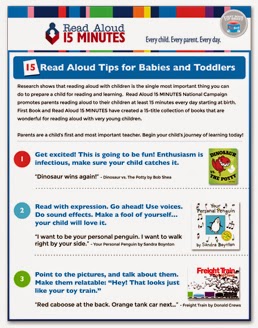
How To Read Aloud to Your Child
When you read aloud to
your child, is it a rewarding experience or an exercise in frustration? Here
are some ways to help ensure an enjoyable experience for both of you when you
read aloud, with children's books that make great read alouds and effective reading
aloud techniques.
Here's How:
1. You don't have to wait for your baby to get to
a certain age to begin reading children's books to him. Start now!
2. Continue reading aloud to your child until he
is at least 10 years old. Children continue to benefit from listening to others
read long after they themselves have learned to read children's books.
3. For young children, children's books with
rhyme, rhythm and repetition are excellent. Be sure to read Mother Goose rhymes
often.
4. Be consistent about reading aloud to your
child. Do it daily and, if possible, about the same time every day. Reading
children's books right before bedtime often works well.
- If you
have several small children, you can read to them together. Picture books
work well for this.
- Don't
be surprised if your children want to hear a favorite children's book
again and again. That's fine. As they get to really know the story well,
have them fill in words for you.
- Try to
choose children's books that are above your child's reading level but at
the child's interest level.
- Some
children love reading about the same characters. If that's what your child
likes, choose several short books in a series or a longer chapter book.
Reading a chapter a night works well.
- Vary
the subject matter of what you read as well as the type. In addition to
fiction, you might also read poetry, magazine articles and non-fiction.
- Try to find children's books
that match your child's interests. Get suggestions from the children's
librarian at your school or public library. Check with a bookseller at
your favorite bookstore.
- If your children are several
years apart you will need to read to them individually as they get older
to ensure that each children's book you choose is at the appropriate
reading and interest level for each child.
- As
your child gets older and gains in reading ability, occasionally pick a
book right at her reading level and take turns reading to one another.
Tips:
1. When reading a chapter of a children's book
each night, always review what happened in the previous night's chapter before
starting a new chapter.
2. When you begin reading aloud to a baby, you
will only be able to keep your baby's attention for a few minutes. That's to be
expected.
3. As children mature, so do their attention
spans.
What You Need:
·
children's books
·
time
·
enthusiasm
Subscribe to:
Posts (Atom)